
Breaking Myths, Building Awareness: NACA Strengthens Media Capacity on PrEP
Strengthening the capacity of journalists and digital communicators to deliver accurate, evidence-based and stigma-free information about HIV prevention.
The Public Relations and Protocol Unit of the National Agency for the Control of AIDS, in partnership with the World Health Organization, convened the National Training of Media Personnel on HIV Pre-Exposure Prophylaxis from 20 to 21 August 2026 in Victoria Island, Lagos.
The two-day training brought together journalists, media professionals and social media influencers to strengthen their understanding of PrEP and improve their ability to communicate accurate, evidence-based and stigma-free information about HIV prevention.
The programme recognised the important role of traditional media and digital platforms in increasing public awareness, addressing misinformation and promoting informed demand for HIV prevention services.
Training objectives
By the end of the training, participants were expected to be able to:
- Understand the fundamentals of HIV transmission and prevention.
- Explain the role, effectiveness, eligibility criteria and benefits of PrEP.
- Report evidence-based and factually accurate information about PrEP and HIV prevention.
- Recognise and address common myths and misinformation surrounding PrEP.
- Develop compelling messages that promote awareness of and demand for available PrEP services.
Leadership and stakeholder participation
The opening session was attended by the Director-General of NACA, Dr. Temitope Ilori, and Mrs Toyin Aderibigbe, Head of Public Relations and Protocol.
Other participants included Dr. Taiwo Olakunle, Deputy Director, Prevention Component, National AIDS, Viral Hepatitis and STI Control Programme; Dr. Oluwafunke Odunlade, Technical Officer for HIV, Viral Hepatitis and STIs at WHO; and Dr. Ayoola Abiodun, Director of Health and Social Care at the National Orientation Agency.
Partner organisations represented
Representatives participated from the AIDS Healthcare Foundation, Clinton Health Access Initiative, Root to Rise, Centre for Population Health Initiative, APIN Public Health Initiatives and the National Key Population Health Research and Response Network, alongside journalists, media professionals and social media influencers.
Accurate information as a public-health tool
In her opening remarks, the Director-General welcomed participants and highlighted the importance of the training to Nigeria’s HIV prevention response.
She explained that the response to HIV extends beyond providing medicines and services. People must also have access to accurate information that enables them to make informed decisions about their health.
Why PrEP awareness matters
PrEP is a highly effective HIV prevention option for people who are HIV-negative and may be at risk of acquiring HIV. Its national impact depends on availability, accessibility, correct understanding, public awareness and people’s willingness to use the available prevention options.
The Director-General highlighted journalists and social media influencers as important partners in public-health communication. Traditional media remains a powerful channel for reaching the public, while social media offers opportunities to engage young people and other audiences with information that is relatable, understandable and easy to access.
She also cautioned against misinformation and sensational reporting. Inaccurate information about HIV prevention can create fear, reinforce stigma and discourage people from accessing services.
Media professionals were therefore encouraged to produce respectful, evidence-based and non-stigmatising information that answers important questions about who can use PrEP, how it works, the available options and where services can be accessed.
Supporting Nigeria’s strategic response
The training was particularly timely as Nigeria continues to strengthen its HIV prevention response under the National Strategic Plan 2026–2030.
The plan emphasises sustainability, innovation, stronger partnerships and greater community engagement. The Director-General described the training as the beginning of a stronger partnership between NACA, the media and the digital community, rather than a one-off event.
Interactive and practical learning
The programme featured technical presentations, interactive discussions, question-and-answer sessions and practical exercises focused on HIV transmission, prevention and PrEP.
Participants developed a clearer understanding of PrEP, including its effectiveness, eligibility, benefits and available options. Sessions addressed common myths and misconceptions while emphasising evidence-based reporting.
Participants also explored how to develop simple, engaging and audience-specific messages for traditional and digital media platforms.
Building a stronger partnership
Participants were encouraged to apply the knowledge gained by producing accurate, engaging and evidence-based PrEP content. Continued collaboration between NACA, WHO and the media will help sustain public awareness, strengthen demand for prevention services and support implementation of the National Strategic Plan 2026–2030.
Scenes from the Training
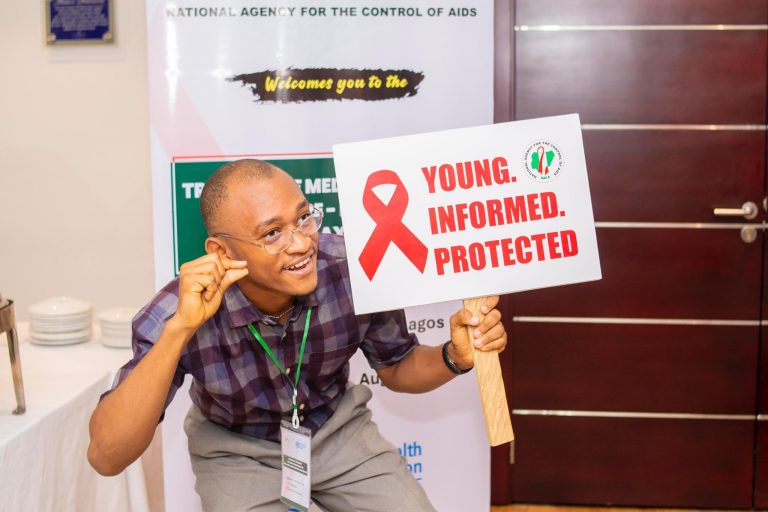
Media professionals, facilitators and partners during the two-day programme in Lagos.