Update on the HIV/AIDS Epidemic and Response in Nigeria
Update on the HIV/AIDS Epidemic and Response in Nigeria [Download PDF]
NIGERIA: Background & Profile
NIGERIA: Epidemiology of HIV/AIDS
National Response to HIV/AIDS
NACA Mandates
Guiding Principles of the National Response
Key Interventions for women, girls, gender & HIV
National Response Program Achievements & Priorities
NIGERIA: Background & Profile
Map of Nigeria

Nigeria: Key Facts
|
1.
|
Number
of States
|
36 states & FCT
|
|
2.
|
Number of Local
Government Areas(LGA)
|
774
|
|
3.
|
Population(Projected
figures)
|
152.6
million
|
|
4.
|
Natural Increase
|
2.6%
|
|
5.
|
Births per 1000
population
|
41
|
|
6.
|
Deaths per 1000
population
|
15
|
|
7.
|
Infant Mortality rate
|
75(per
1000 live births)
|
|
8.
|
Life Expectancy
|
47.7years
|
|
9.
|
Human Development Index
score
|
0.51
|
|
10.
|
Religion(s)
|
Christianity,
Islam and Traditional
|
|
11.
|
Currency
|
Naira
(NGN)
|
|
12.
|
Ethnic
groups/Tribes
|
Hausa/Fulani, Yoruba, Igbo, Ijaw and some 250
ethno-linguistic groups
|
|
13.
|
Official Language
|
English
|
|
14.
|
Head of State
|
Dr. Goodluck Ebele Jonathan
|
NIGERIA: Epidemiology of HIV/AIDS
-
First case of HIV/AIDS was reported in 1986.
-
In 2010, HIV prevalence is highest in urban areas, the North Central zone, Benue State and among the 30-34 years age group.
-
HIV prevalence among youth age 15-24 declined from 6% in 2001 to 4.3% in 2005, 4.2% in 2008 and 4.1% in 2010.
-
More than 80% of HIV transmission in Nigeria is through heterosexual sex.
-
Among key populations at higher risk, HIV prevalence is 24% among sex workers; 17% among MSM and 4% among IDUs respectively (IBBSS 2010).
-
The drivers of the epidemic in Nigeria include high illiteracy, high rates of Sexually Transmitted Infections (STIs) in vulnerable groups, poverty, low condom use and general lack of perceived personal risk.
Trends in HIV/AIDS prevalence 1991-2010
-
National Median HIV Prevalence (ANC): 4.1%
-
Estimated No of people living with HIV/AIDS: 3.1 million
-
Annual HIV positive births: 56,681
-
Cumulative AIDS deaths: 2.1 million (Male – 970,000; Female – 1.61 million)
-
Annual AIDS Death: 215,130 (Male – 96,740; Female – 118,390)
-
Number requiring Antiretroviral therapy: 1,512,720 (Adult – 1,300,000; Children – 212,720)
-
New HIV infection: 281,180 (Adult – 126,260; Children – 154,920)
-
Total AIDS Orphans: 2,229,883
-
Mode of transmission studies show that IDU, FSW and MSM alone, who constitute about 1% of the adult population, contribute almost 25% of new HIV infections.
-
IDU, FSW, MSM and their partners, contribute as much as 36% of new infections even though they constitute only 3.4% of the adult population.
National Response to HIV/AIDS
-
The HIV response in Nigeria was health sector driven from 1986-1999
-
A multisectoral response commenced in 2000.
-
Coordinating structures have been established at the various levels: National Agency for the Control of AIDS (NACA) at the national level, State Agencies for the Control of AIDS at the state level and Local Government Action Committee on AIDS (LACA) at the Local Government level respectively.
-
Prevention, treatment as well as care and support programs have been established and scaled up in the last decade.
-
The various HIV response programs are guided by appropriate and relevant policies and plans which have been developed in a participatory process involving all relevant stakeholders including PLHIV.
-
Funding for the HIV response in Nigeria is obtained from both domestic (Federal Government of Nigeria, private sector and state governments)and International sources (US Government, DFID, UN agencies and Global Fund).
NACA Mandates
The National Agency for the Control of AIDS (NACA) was established in 2000 as a committee in the Presidency to coordinate multisectoral programmes on HIV and AIDS in Nigeria. In May 2007, the committee was transformed into an agency through an Act of Parliament. NACA’s mandates are as follows:
-
Formulate policies and guidelines on HIV/AIDS.
-
Advocate for mainstreaming of HIV/AIDS interventions into all sectors of the society.
-
Plan and coordinate activities of the various sectors in the Strategic Framework of the national response.
-
Facilitate the engagement of all tiers of government and all sectors on HIV/IADS prevention, care and support.
-
Support HIV/AIDS research in the country.
-
Mobilize resources (local and foreign) for HIV/AIDS activities.
-
Provide and coordinate linkages with the global community on HIV/AIDS.
-
Monitor and evaluate all HIV/AIDS activities in the country.
Guiding Principles of the National Response
The HIV national response is guided by the following principles:
-
Feasibility, Government ownership and leadership, existing local and international commitments, universal coverage and socio cultural concerns.
-
Gender principles to address issues of women, girls, gender equality and women empowerment.
-
Decentralization of the response to LGAs and community to improve access to quality affordable and accessible services.
-
Integration of HIV prevention services into other health related and development programmes to maximize efficiency and achieve greater impact.
Key Interventions for women, girls, gender & HIV
NACA and her partners developed a six year strategic Plan and programme implementation framework to address vulnerability issues and mitigate impact of HIV/AIDS on women and girls through the following strategic interventions:
-
Strengthen the capacity of females and male agents and champions to act to reverse harmful traditional/cultural practices
- Strengthen women and girls’ leadership and life skills in schools, workplaces and community.Integrate HIV into reproductive health services.
-
Strengthen the capacity of religious groups to provide appropriate RH information to young people.
-
Social and community mobilization for increased male involvement in reproductive health.
-
Intensive social marketing for increased availability and demand for female condoms and microbicides.
-
Improve access of all pregnant women to HIV counseling and testing and positive pregnant women to medicines to reduce MTCT as well as food supplements and quality infant feeding counseling.
-
Advocate for all HIV exposed infants to have access to early infant diagnosis and ARV prophylaxis.
-
Champion and coordinate campaigns on zero tolerance to violence against women/gender based violence and provide medical, social and psychological services to those that are affected.
-
Establish functional gender management systems/departments in key institutions in Nigeria.
-
Promote mass mobilization of women’s groups, CSOs to support and promote the strategic objectives of the national response on women, girls, gender and HIV in Nigeria.
National Response Program Achievements & Priorities
ART Program
-
Antiretroviral therapy (ART) program in Nigeria commenced in 2002.
-
Free ARV provision policy in 2006 by The Federal Government has led to increased access and uptake of treatment for eligible people living with HIV.
-
ART coverage has increased over the years
-
Using the new ART guidelines, coverage of ART in 2010 stands at 359,181.

ART Program Priorities (2010-2015)
Goal
-
All eligible PLHIV to receive quality treatment services for HIV/AIDS and opportunistic infections (OIs) as well as TB treatment services for PLHIV co-infected with TB
Objectives
-
At least 80% of eligible adults (women and men) and 80% of children (boys and girls) are receiving ART based on national guidelines by 2015
-
At least 80% of PLHIV are receiving quality management for OIs (diagnosis, prophylaxis, and treatment) by 2015
-
All states and local government areas (LGAs) are implementing strong TB/HIV collaborative interventions by 2015
-
All TB suspects and patients have access to quality and comprehensive HIV and AIDS services by 2015
-
All PLHIV have access to quality TB screening and those suspected to have TB, to receive comprehensive TB services.
Challenges
-
Inadequate number and geographical spread of sites providing ART services.
-
Infrastructure, systems, and staff required to properly monitor treatment retention and loss are becoming increasingly inadequate as programmes scale up.
-
Inadequate access to ART for both adults and children.
-
Inadequate referral network and linkages between the different levels of health care and between facilities and community services.
PMTCT Program
-
PMTCT programme in Nigeria commenced in 2001 with the establishment of 6 PMTCT sites.
-
As at December 2010 there are 684 PMTCT sites in the country.
-
PMTCT coverage increased from 5.3%in 2007 to 11% in 2010.
-
6% of infants born to HIV infected women received ART prophylaxis for prevention of mother-to-child transmission.
-
The proportion of infants born to HIV infected women started on cotrimoxazole prophylaxis within 2 months in 2010 was 2%.
PMTCT Program routine data Jan – December 2010
|
Proportion of Health facilities providing ANC service
|
4.7%
|
|
Proportion of health facilities providing PMTCT services
|
2.9%
|
|
Number of pregnant women counselled and tested for HIV
|
907,387
|
|
Number of pregnant women who tested positive
|
31,577
|
|
Number of HIV positive pregnant women who received ARV
prophylaxis
|
26,133
|
|
Number of infants that tested positive
|
2074
|
|
Number of infants born to HIV infected women that
received ARV prophylaxis
|
14,573
|
PMTCT Program Targets (2010-2015)
Goal
-
The goal of the PMTCT program in Nigeria is to reduce the incidence of HIV/AIDS.
Objectives
-
At least 80% of all pregnant women have access to quality HIV testing and counseling by 2015
-
At least 80% of all HIV positive pregnant women have access to more efficacious ARV prophylaxis by 2015
-
At least 80% of all HIV exposed infants have access to ARV prophylaxis by 2015
-
At least 80% of HIV positive pregnant women have access to quality infant feeding counseling
-
At least 80% of all HIV exposed infants have access to early infant diagnosis services
Challenges
-
PMTCT programmes are largely donor driven
-
Coordination, Monitoring & Evaluation of PMTCT services needs to be strengthened.
-
Poor integration of HIV in Reproductive Health (RH) services.
-
Inadequate infant feeding counselling services
-
Inadequate Early Infant Diagnosis (EID) at PMTCT sites and children hospitals.
-
Wide gap between antenatal attendees and deliveries at health facilities.
-
Community and private sector engagement in PMTCT services delivery needs to be strengthened.
Strategic Interventions
-
Decentralization of PMTCT services to increase coverage.
-
Scale up Early Infant Diagnosis (EID) to all PMTCT sites and children hospitals
-
Institutionalize task shifting in health services delivery
-
Strengthen coordination and management of health services delivery at all levels.
-
Strengthen data management and M&E system
HCT Program
-
Survey results have shown that the desire by Nigerians to go for HIV testing increased from 43% in 2005 to 72% in 2007 (NARHS, 2007).
-
The uptake of HCT is low among the general population as the proportion of people tested is only 14.4% for females and 14.7% for males respectively.(NARHS, 2007)
-
Less than 50% of women know where HCT can be obtained (NARHS, 2007).
HCT among MARPs in the last 12months (2007 & 2010)

HCT Program routine data Jan – December 2010
|
Number of health facilities providing HCT services
|
1064
|
|
Number of men aged 15 years and older who were counselled,
tested and received their results
|
656,706
|
|
Number of women aged 15 years and older who were
counselled, tested and received their results
|
1,631,099
|
|
Total number of men and women aged 15 years and older who
were counselled, tested and received their results
|
2,287,805
|
Challenges
-
The coverage of HCT services is still inadequate particularly in hard to reach rural areas despite increased number of persons counselled, tested and receiving results.
-
Even though HIV testing is higher among MARPS, HCT is not easily accessible to these special groups.
-
Reluctance of men to go for HCT
Strategic Interventions
-
Integrate HCT into routine health care services such as STI and TB clinics, antenatal care and other clinic settings at all levels of health care to further expand reach, access and coverage of HCT services.
-
Expansion of community outreach and mobile HCT services and testing campaigns to rural communities and other hard to reach areas as well as MARPS.
Behaviour Change Programs
-
Even though awareness of HIV/AIDS is high(93%), comprehensive knowledge of HIV is low at 25% (NARHS, 2007)
-
Age of sexual debut is 16 years for females and 17 years for males. (NDHS.2008)
-
43% of 15-19 year old girls have ever had sex
-
Young adult women (20-24) and men (20-29) report highest levels of multiple partnerships (2% and 18% respectively)
-
The proportion of males and females using a condom the last time they had sex with a non marital partner is 29.3%for males and female 22.9% respectively (NDHS 2008)
-
The proportion of female sex workers reporting the use of a condom the last time they had sex with their most recent client increased from 92% in 2007 to 95% in 2009 (Source: IBBSS 2010).
Behaviour Change Programs (2005-2009)
-
Poorly coordinated – based on implementers interpretation of the NSF
-
Lack of recognition of epidemic drivers
-
Lack of recognition of state and region wide disparities in the epidemic
-
Poor monitoring and evaluation of interventions and outcomes
-
Poor evidence-base for planning, implementation and evaluation of prevention interventions
-
No national prevention operational research agenda
-
Relegated to background as national response was largely treatment driven.
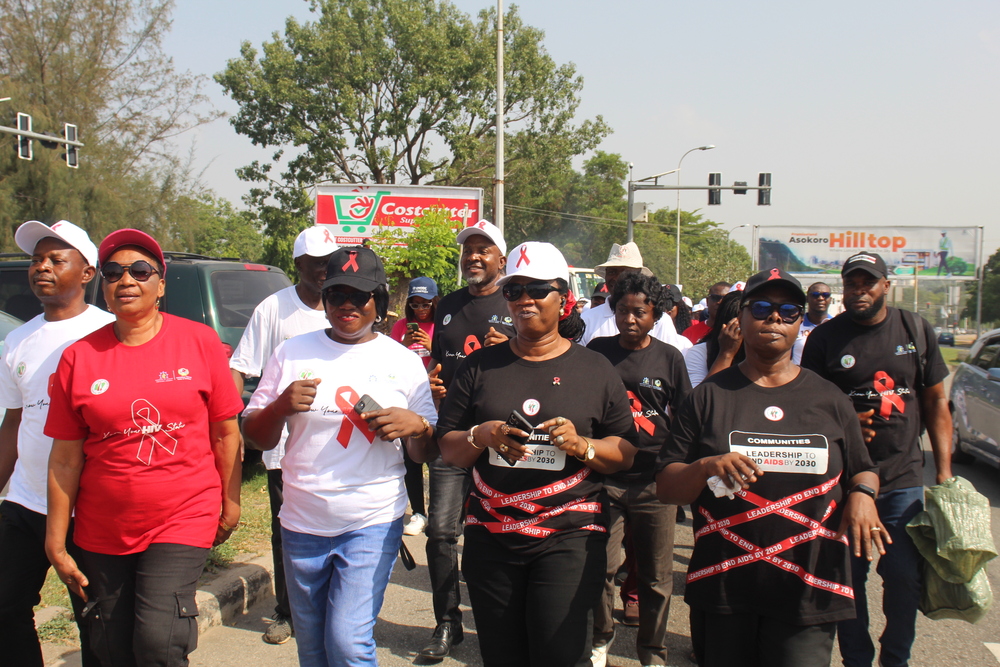
Behavior Change Priorities (2010-2015)
-
At least 80 % of all Nigerians have comprehensive knowledge on HIV and AIDS by the year 2015
-
At least 80% of young people 15-24 years adopting appropriate HIV and AIDS related behavior
-
At least 80% of Most-At-Risk Populations (MARP) reached with group-specific interventions and adopting appropriate HIV and AIDS related behavior.
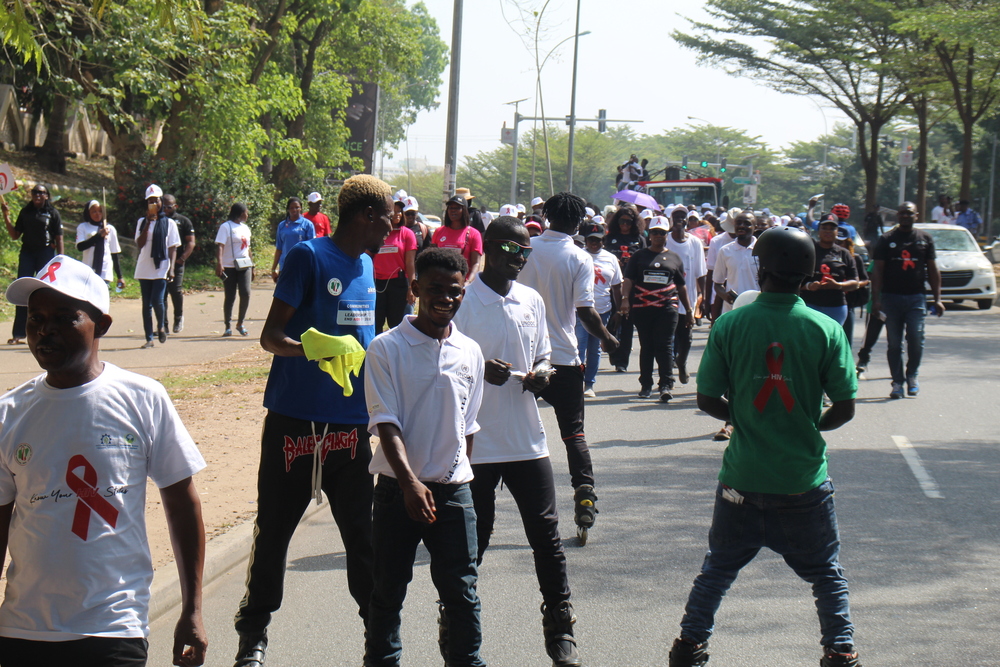
-
At least 80% of men and women of reproductive age (MWRA) have knowledge about dual protection benefit of condoms
-
At least 80% of sexually active males and females use condoms consistently and correctly with non-regular partner by 2015.
BCC Routine data for the period January – June 2010
| |
January - June
|
July – December 2010
|
|
|
Male
|
Female
|
Total
|
Male
|
Female
|
Total
|
Grand Total
|
|
Number of people trained to provide HIV/AIDS peer education
|
3546
|
2932
|
6478
|
2892
|
1792
|
4684
|
11162
|
|
Number of female sex workers reached with HIV/AIDS prevention
programs.
|
|
12446
|
12446
|
|
10773
|
10773
|
23219
|
|
Number of armed forces) reached with HIV/AIDS prevention
programs
|
1951
|
775
|
2726
|
2906
|
1579
|
4485
|
7211
|
|
No of transport workers reached with HIV/AIDS prevention
programs.
|
19230
|
10750
|
29980
|
17062
|
6737
|
23799
|
53779
|
|
Number of condoms distributed through social marketing outlets
|
|
|
|
|
|
|
93,813,190
|
Care and Support Programs
-
Nigeria has the largest burden of orphans and vulnerable children in the world estimated at 17.5 million (FMWASD, 2008) with HIV/AIDS as one of the major causes of orphan hood in Nigeria.
-
In 2010 households of 2,748 OVCs (male 1,433, female 1,315) received free basic external support in caring for the child.
-
48,873 OVCs received educational support in 2010.
-
Data collection, reporting tools and a database for OVC response have been developed.
Challenges
-
Poor coordination of activities of stakeholders involved with OVC programming in the country.
-
Inadequate institutional, technical and human capacity at all levels to coordinate the OVC response in the country.
-
Poor funding for the OVC response
-
Networking and referral mechanisms among the various stakeholders needs to be strengthened
Priorities for Care and Support (2010-2015)
Goal
The goal of this thematic focus is to promote the survival and improve the quality of life of PILHIV and people affected by HIV/AIDS (PABA) especially OVC.
Objectives
-
To improve access to quality care and support services (as defined by national guidelines) to at least 50% of PLHIV by 2015
-
To link at least 50% PLHIV and PABA, especially females (women and girls) and marginalized and people with special needs, to IGA and poverty alleviation programs by 2015
-
To reduce stigma & discrimination targeted at PLHIV and PABA by at least 60% on baseline value by 2015
-
To support effective referral and linkages within and between relevant health care facilities and community-based care services improved by 80% by 2015
-
To create an enabling environment for the legal protection of OVC by 2015
-
To provide integrated comprehensive social support (as defined by national guidelines) to at least 30% OVC of most vulnerable OVC by 2015.
-
To strengthen the capacity of 30% of older OVC (especially girls) households to mitigate the impact of HIV/AIDS by 2015
-
To establish functional gender-responsive OVC coordinating mechanism at all levels by 2015
Update on the HIV/AIDS Epidemic and Response in Nigeria [ Download PDF]
|